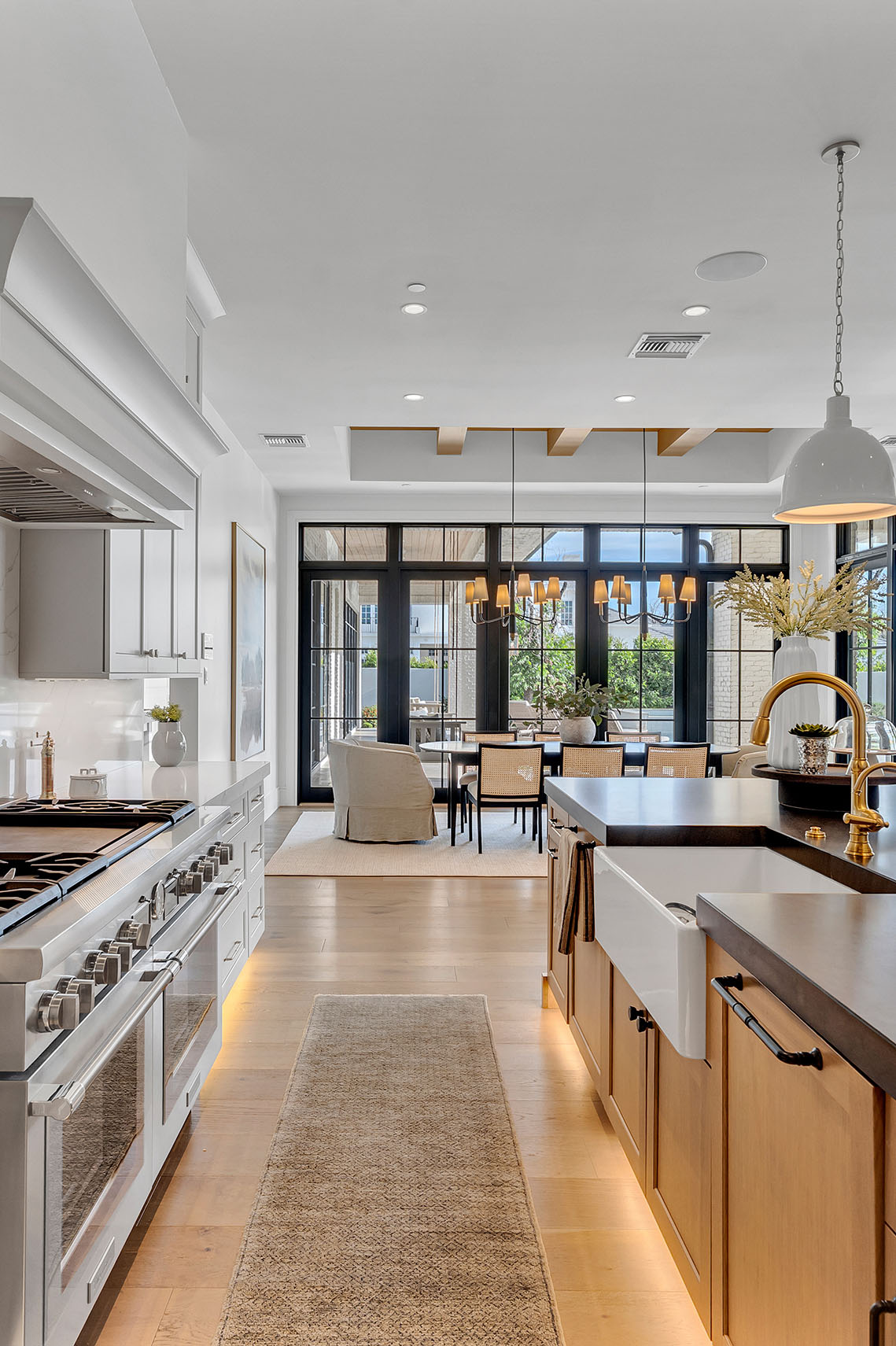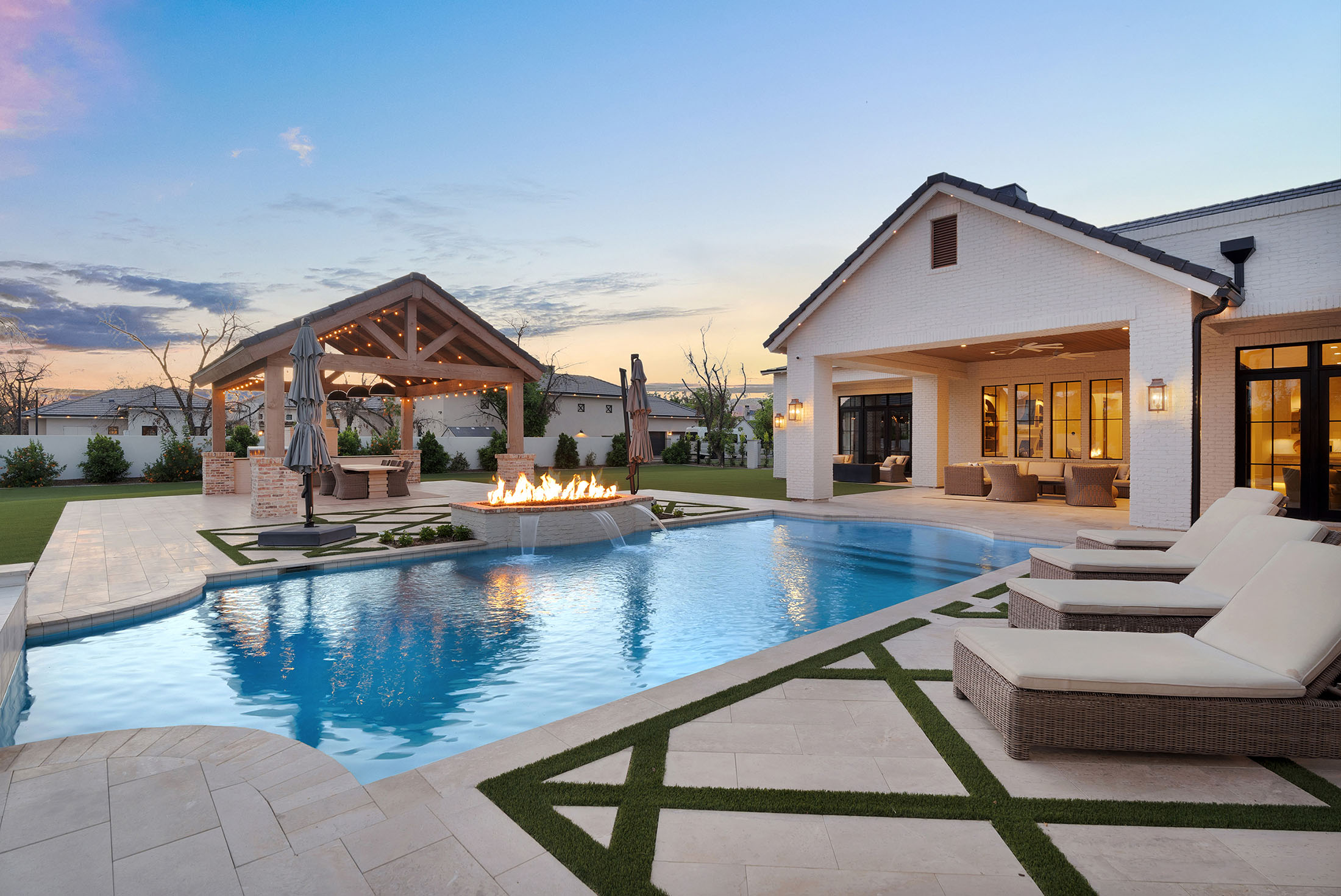


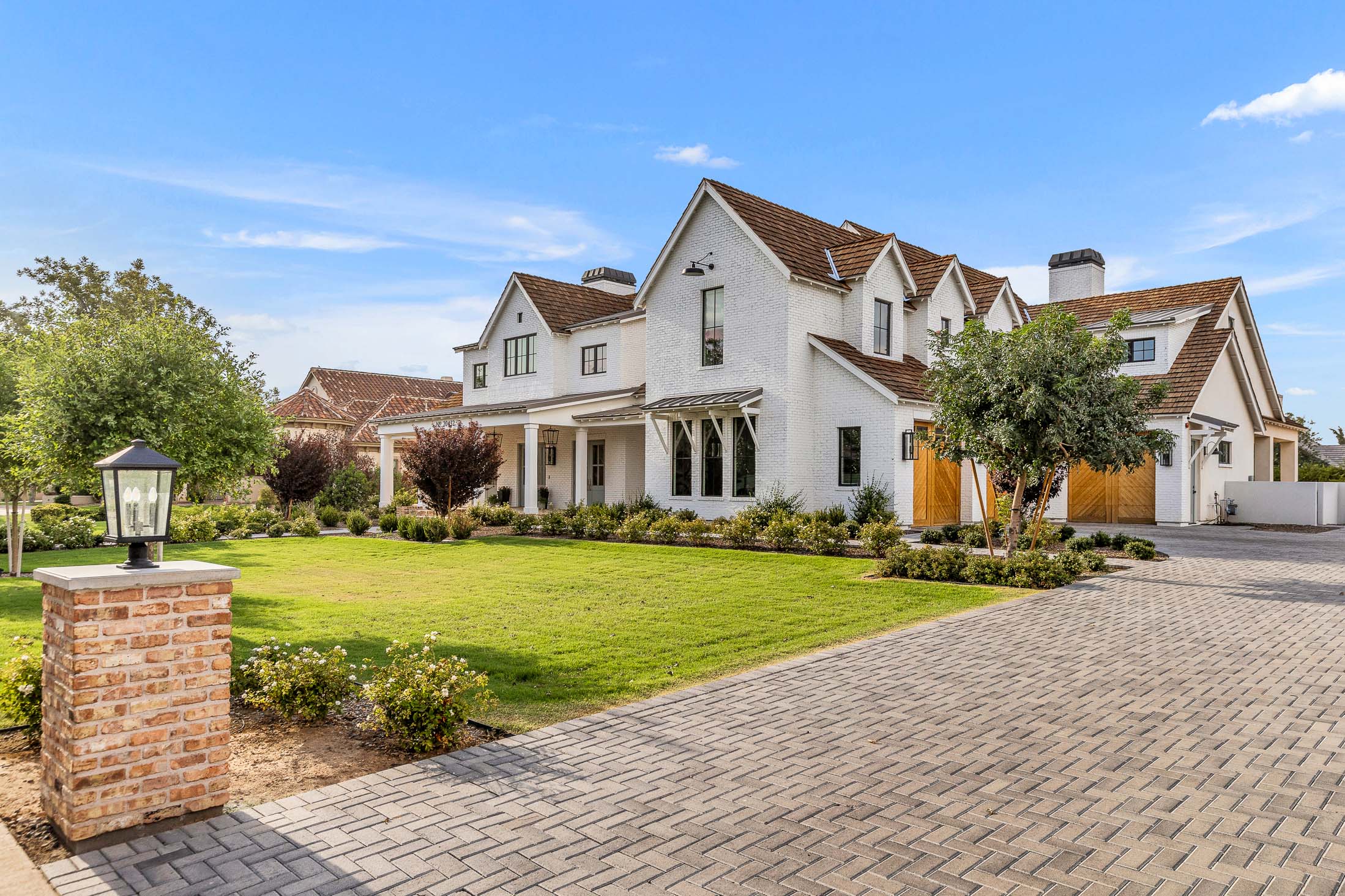
Walk through a luxury home built in 2006 and you can usually date it within a year or two: the Tuscan-brown travertine, the ornate iron balusters, the tumbled-stone backsplash. Walk through a home built in 1926 with classic proportions, honest materials, and disciplined detailing, and it still feels current a century later. That difference — between a home that expires and a home that endures — is the difference between trendy luxury and timeless luxury home design.
At The Ashtin Group, we build luxury custom homes across Utah County and the Wasatch Back, and the question we hear most often after budget is some version of this: “How do we make sure this home doesn’t feel dated in ten years?” It’s the right question. A custom home is likely the largest single investment of your life, and building around a passing trend is one of the fastest ways to erode both its livability and its resale value.
The good news: timelessness isn’t luck, and it isn’t a style. It’s a set of decisions — architectural, material, and spatial — that you can make deliberately from the very first design meeting. This guide breaks down how we approach classic home design and enduring luxury at every phase of a custom build, and where trends actually do belong in a well-designed home.
Timeless vs. Trendy: What’s Actually the Difference?
Before you can build a timeless home, it helps to define the terms honestly.
Trendy design is driven by novelty. It photographs well right now, it spikes on social media, and it’s usually identifiable by a handful of signature elements everyone adopts at once — a specific paint color, a specific tile shape, a specific cabinet style. Trends aren’t bad; they’re just short-lived by definition. The average interior trend cycle has compressed from roughly a decade to just a few years, accelerated by Pinterest and Instagram.
Timeless design is driven by principles that predate any trend: proportion, scale, symmetry and balance, natural light, honest materials, and craftsmanship. These principles show up in Georgian townhomes, mountain lodges, and modern desert homes alike. A timeless home isn’t necessarily “traditional” — plenty of contemporary homes are deeply timeless — it’s a home where every decision answers to the architecture rather than to the algorithm.
A useful test we give clients: for any given design decision, ask “Would this choice have made sense 20 years ago, and will it still make sense 20 years from now?” If the answer is yes on both ends, it’s probably a timeless decision. If the honest answer is “it’s everywhere right now,” it belongs in a reversible layer of the home — not in the bones.
Principle 1: Get the Architecture Right Before Anything Else
Timelessness is decided at the architectural stage, long before anyone picks a countertop. The homes that endure share a few structural traits:
Classical proportion. Rooms whose height, width, and length relate to each other comfortably; windows sized and placed in rhythm with the facade; rooflines that resolve cleanly instead of colliding. Proportion is why a simple, well-composed farmhouse can outshine a much larger home with a chaotic, “more is more” elevation. When a home feels right and you can’t articulate why, proportion is usually the reason.
Symmetry and intentional balance. Full symmetry isn’t required — mountain-modern homes are often asymmetrical — but balance is. Visual weight should be distributed with intent across every elevation, not just the front.
Regional fit. A timeless home belongs to its place. In Utah County and the Heber Valley, that means architecture that responds to mountain views, heavy snow loads, intense summer sun, and the local material palette of stone and timber. A Mediterranean villa in Mapleton or a Cape Cod in Midway will always read as imported — and imported reads as dated faster than almost anything else. The homes we build in Alpine, Highland, and Heber that age best are the ones designed for the Wasatch, not dropped onto it.
Honest massing. Avoid the temptation to bolt on turrets, faux dormers, and decorative gables to create “character.” Character comes from clarity. A home with two or three well-resolved forms will outlast a home with nine competing ones.
This is also where builder involvement matters most. When we join the project during architectural design — rather than after plans are finished — we can flag the decisions that look striking on a rendering but create maintenance problems, budget blowouts, or dated-on-arrival styling. We cover this collaboration in depth in our guide to what it costs to build a luxury home in Utah, and the same early-involvement principle applies doubly to timelessness.
Principle 2: Choose Materials That Age, Not Materials That Expire
Materials are where “enduring luxury” becomes literal. The rule of thumb: natural materials age; imitation materials expire.
Real stone, genuine hardwood, solid brass, copper, marble, honest plaster — these materials develop patina. They look better at year fifteen than at year one. Imitation materials — printed laminates, faux stone veneers in trendy colorways, thin overlays — don’t patina; they wear out, and they carry the date-stamp of whatever year their pattern was fashionable.
For Utah luxury homes, our shortlist of enduring materials includes:
- Locally appropriate natural stone for exteriors, fireplaces, and wainscots — stone connects the home to the landscape and never cycles out of style.
- Site-finished hardwood floors in classic widths and natural tones. Ultra-gray washes and high-gloss exotic species date quickly; a natural white oak in a 5–7″ plank has been beautiful for a century.
- Full-slab natural stone or honed quartzite at kitchen worksurfaces, in quiet patterns rather than dramatic, high-movement slabs that dominate the room.
- Real wood millwork — built-ins, paneling, substantial baseboards and casings. Millwork is the single most underrated timelessness investment; it gives a new home the settled quality of an established one.
- Quality metals in classic finishes. Unlacquered brass, aged bronze, and polished nickel have been in continuous use for over a century. Finishes marketed as this year’s “it” metallic tend to be next decade’s regret.
- High-performance windows with real proportions. Steel-look or wood-clad windows with correctly scaled frames and divided lights (where the architecture calls for them) are a permanent upgrade. Windows are among the hardest and costliest elements to change later — get them right the first time.
A note on budget: enduring materials often cost more upfront, but they compound in value. Trendy finishes get renovated out within 10–15 years; timeless materials stay, appraise well, and save you an entire remodel cycle.
Principle 3: Design the Floor Plan for Decades, Not for the Listing Photos
Trends aren’t limited to finishes — floor plans go in and out of fashion too. The fully open concept that dominated the 2010s is already softening into “broken-plan” layouts with connected-but-defined rooms, because people rediscovered that acoustics, coziness, and cooking smells matter.
A timeless luxury floor plan is organized around how humans actually live, in every season of life:
Rooms with purpose. A great room, a genuine dining space, a study that can hold quiet — defined spaces endure because human needs endure. Hyper-specific trend rooms (the dedicated “Zoom room,” the massive garage gym with no windows) tend to age poorly unless designed with flexibility.
Flexibility built into the bones. Main-floor living potential, a suite that can serve aging parents or adult children, spaces that can convert as your family changes. Multi-generational flexibility is one of the most requested features in Utah County custom homes, and it’s timeless because family itself is timeless.
Generous transitions. Real entries, real mudrooms, hallways with breathing room. Trendy plans squeeze transitions to inflate great-room square footage; timeless plans understand that arrival and movement are part of luxury.
Indoor-outdoor connection engineered for a four-season climate. Covered outdoor rooms, properly oriented patios, and glazing that frames Wasatch views make a home feel permanently connected to its site — a quality that never dates.
Principle 4: Prioritize Natural Light and Siting
No finish material will ever do as much for a home as correctly captured natural light. Timeless homes are sited and glazed with discipline: primary living spaces oriented to views and southern light, morning light in kitchens and breakfast areas, western exposure managed with deep overhangs so summer sun doesn’t cook the great room.
This is another decision that must happen early — orientation can’t be renovated. When we walk a lot in Mapleton or Midway with clients, we’re mapping sun paths, prevailing winds, and view corridors before a single line is drawn. A home that manages light beautifully feels current in every decade, because sunlight has no trend cycle.
Principle 5: Invest in Craftsmanship You Can Feel
Timelessness lives in the details most people never consciously notice: miters that stay tight through twenty Utah winters, doors with real weight and hardware that operates like an instrument, stair rails that flow through turns without awkward junctions, tile laid out from the centerline of the room so the cuts land symmetrically.
Craftsmanship is the quiet difference between a home that impresses on day one and a home that satisfies for fifty years. It’s also why builder selection matters as much as architect selection. Detailing at this level requires craftspeople who have done it for decades and a builder who supervises to that standard — not a production schedule that treats trim carpentry as a race.
Where Trends Do Belong: The Reversible Layers
Here’s the part many “timeless design” guides get wrong: a timeless home is not a trend-free home. A home with zero contemporary personality feels like a museum. The skill is knowing which layers of the home can carry trends safely — the layers you can change in a weekend or a season, not the ones set in stone and framing.
Trend-safe, reversible layers include paint colors, textiles and drapery, lighting fixtures, art, accent furniture, rugs, and decor. Trend-dangerous, permanent layers include roofline and massing, window packages, flooring, tile and stonework, cabinetry footprints, and architectural millwork.
This is exactly how our integrated design-build model works. While The Ashtin Group builds the enduring envelope, Ashley’s team at Designly Done — our luxury home decor store and full-service design center in Provo — layers in the current, personal, evolving elements: curated textiles, lighting, art, and decor that let a timeless home feel fresh right now. When tastes shift in five years, you refresh the layers, not the architecture. That’s the entire secret in one sentence: spend permanently on the permanent things, and playfully on the changeable things.
If you’re furnishing a new build or refreshing an existing one, the Designly Done team designs these layered, collected-over-time interiors every day — the kind that photograph beautifully without being enslaved to any single year’s look.
A Timeless Color and Finish Strategy
Because clients ask: yes, there is a reliable palette strategy for enduring luxury interiors.
Build the permanent surfaces — flooring, stone, cabinetry, large tile fields — in warm, natural neutrals drawn from the materials themselves: the tones of white oak, limestone, plaster, and wool. These aren’t “builder beige”; they’re the colors natural materials actually come in, which is why they never expire.
Then introduce color in the reversible layers, as saturated as your personality wants. A deep green velvet chair, hand-blocked drapery, bold art — these bring life without risk. If a color trend passes, you’ve lost a pillow, not a kitchen.
One caution from two decades of building: be careful with high-commitment trend finishes in kitchens and baths — the two most expensive rooms to renovate. The all-gray kitchen felt permanent in 2015. It wasn’t.
The Design-Build Advantage for Timeless Homes
Timelessness requires a hundred coordinated decisions across architecture, construction, and interiors — and it falls apart when those disciplines work in silos. An architect designs a beautiful stair; a builder value-engineers the rail profile; a decorator fights the finishes. The result is a home with no single point of view.
Our answer is integration. Justin leads construction at The Ashtin Group; Ashley leads design through Designly Done. One team carries the home from lot walk to final styling, which means the proportions, materials, floor plan, light, craftsmanship, and interior layers are all answering to the same vision. That continuity is, more than any product or finish, what makes a home feel inevitable rather than assembled — and inevitability is what timeless actually means.
If you’re planning a custom home in Utah County, Heber Valley, or anywhere along the Wasatch Front, start a conversation with The Ashtin Group. We’ll walk your lot, talk honestly about budget and timeline, and show you how to build a home your grandchildren will still think is beautiful.
Frequently Asked Questions
Timeless luxury home design is built on permanent principles — proportion, natural light, honest materials, quality craftsmanship, and a floor plan organized around how people actually live. Trendy design is built on of-the-moment finishes and features that photograph well now but date quickly. The practical test: timeless decisions would have made sense 20 years ago and will still make sense 20 years from now.
High-commitment trend finishes in expensive-to-change locations: heavily stylized tile and backsplashes, trend-colored cabinetry, dramatic “it” countertop slabs, faddish flooring tones (like the ultra-gray washes of the 2010s), and bolt-on architectural ornament that doesn’t belong to the home’s style. Because kitchens and baths cost the most to renovate, trend mistakes there are the most expensive to unwind.
Absolutely. Timeless doesn’t mean traditional — it means disciplined. Contemporary homes with clean massing, correct proportions, natural materials, and strong indoor-outdoor connection age beautifully. Many of the mountain-modern homes The Ashtin Group builds across Utah County and the Wasatch Back are contemporary in style and timeless in principle.
The architecture and planning phases cost roughly the same — good proportion is free. Enduring natural materials (real stone, hardwood, quality windows, custom millwork) typically do carry a premium over imitation products, but they eliminate the 10–15 year “renovate out the trends” cycle and hold appraisal value better. Over the life of the home, timeless is usually the less expensive choice. See our full breakdown of Utah luxury home construction costs for current per-square-foot ranges.
Layer personality into the reversible elements — lighting, textiles, art, color, and decor — while keeping the permanent envelope disciplined. This is the design philosophy behind Designly Done, our sister design studio and home decor store in Provo: curated, collected interiors that bring current life to enduring architecture, and that can evolve with you over the years without renovation.
Before architectural plans are finalized — ideally before they’re started. Early builder involvement keeps proportions, materials, and structural ambitions aligned with your budget, and prevents the value-engineering compromises that undermine timeless detailing later. The Ashtin Group regularly collaborates with clients and architects from the initial lot walk onward.
Ready to Elevate Your Home? Start Here.
The right everyday pieces turn a house into a home that feels considered, warm, and unmistakably yours. Whether you’re refreshing a single room or designing a home from the studs up, our integrated design-build team is here to help you create — and furnish — a space you love.
Designly Done — Utah County’s Luxury Home Decor Store & Design Center | designlydone.com
Ashtin Group UT — Utah County’s Luxury Custom Home Builder | ashtingrouput.com
Building and designing extraordinary homes across Provo, Orem, Lehi, Saratoga Springs, Eagle Mountain, Springville, Spanish Fork, Mapleton, Payson, and all of Utah County, Utah.
About the Founders: Ashley and Justin Kuhni are the founders of Designly Done (luxury home decor store and full-service interior design center) and Ashtin Group UT (luxury custom home builder serving the Wasatch Front). Together they lead an integrated design-build team dedicated to creating and furnishing extraordinary homes throughout Utah County.