

Building a custom home is one of the most rewarding investments you’ll ever make — and for most people, one of the most unfamiliar. Unlike buying an existing house, where what you see is what you get, a custom build is a journey that unfolds over many months, touching everything from financing and land to the final coat of paint and the furniture that fills each room. Knowing what to expect at each stage transforms the experience from stressful guesswork into an exciting, well-paced collaboration.
At The Ashtin Group, Utah County’s luxury custom home builder, we guide homeowners through this process every day, and we’ve learned that clarity is the antidote to anxiety. When you understand the custom home building process — the sequence, the timeline, and what’s expected of you at each step — you can make confident decisions and genuinely enjoy watching your home come to life. This guide walks through every phase, from the first conversation to the day you receive your keys.
How Long Does the Custom Home Building Process Take?
Before diving into the phases, it helps to set expectations on timeline. A custom home in Utah County typically takes anywhere from 10 to 16 months from breaking ground to move-in, with the planning and design phase adding several more months on the front end. So from your first design meeting to the day you move in, a realistic range is 14 to 24 months, depending on the size and complexity of the home, the lot, permitting timelines, weather, and how quickly design decisions are finalized.
It’s a meaningful commitment of time, but each month builds toward something made specifically for you. The phases below explain where that time goes and why each stage matters.
Phase 1: Vision, Budget, and Choosing Your Builder
Every great custom home starts with a clear vision and an honest budget. Before any drawings exist, this first phase is about alignment — getting clear on how you want to live, what you can invest, and who you want to partner with.
This is also when you choose your builder, and it’s arguably the single most important decision in the entire process. Your builder will guide design, manage subcontractors, control quality, and steward your budget for well over a year. Look for a builder with a strong local track record, transparent communication, and a process you understand. At The Ashtin Group, we begin with conversation rather than blueprints — learning how you live, what inspires you, and what you’ve loved and disliked in past homes.
During this phase you’ll establish a realistic budget that accounts for land, construction, design, finishes, landscaping, and a contingency reserve for the unexpected. A good builder will help you understand where your money goes and how to prioritize spending so your investment lands where it matters most to you. Securing construction financing or proof of funds also typically happens here.
Phase 2: Finding and Evaluating Your Lot
If you don’t already own land, finding the right lot is a foundational step — and one where an experienced local builder is invaluable. Not all lots are created equal, and the land you choose profoundly shapes what’s possible, what it costs, and how the finished home will feel.
Key considerations include the lot’s slope and topography, soil conditions, drainage, sun orientation and views, utility access, and any HOA or municipal restrictions. A steep view lot in the foothills above Alpine or Draper offers drama but may require costly excavation and engineering. A flatter lot in Mapleton or Spanish Fork may build more economically. Across Utah County, factors like snow load, elevation, and the Wasatch Front’s freeze-thaw cycles all influence design and construction.
The Ashtin Group regularly walks lots with prospective clients before purchase, helping you understand the true build implications of a piece of land before you commit. This early guidance can save significant money and prevent unwelcome surprises later.
Phase 3: Architectural Design and Planning
This is where your home begins to take shape on paper. Working with an architect or designer — and your builder — you’ll move from rough concepts to detailed construction documents.
The design phase usually progresses in stages. It begins with schematic design, where the basic layout, room relationships, and overall form are sketched out. Next comes design development, where those ideas are refined — room dimensions, window placements, rooflines, and the architectural style are locked in. Finally, construction documents translate the design into the precise, detailed drawings that contractors and the permitting office require.
This is also the phase to decide on architectural style. If you’re weighing modern, traditional, or a transitional blend, this is when those choices are made — and they shape everything that follows. (We cover this decision in depth in our related post on modern versus traditional luxury homes.) Throughout design, your builder should be involved to keep the plans aligned with your budget, flagging choices that could cause cost overruns before they’re committed to paper.
Design also extends to interiors. The most cohesive homes are the ones where architecture and interior design are planned together from the start. Through our sister company, Designly Done, led by designer Ashley Kuhni, we integrate interior design into the build from day one — so finishes, fixtures, lighting, and even the furniture work as a unified whole rather than an afterthought.
Phase 4: Permits, Engineering, and Pre-Construction
Before a shovel hits the ground, your plans must clear several technical hurdles. Structural engineering ensures the home is sound for its site and Utah’s snow loads. The plans are submitted to the local municipality for permitting, a process that can take several weeks to a few months depending on the jurisdiction and the home’s complexity.
This phase also includes finalizing selections and locking in the construction contract and detailed budget. The more decisions you make now — flooring, cabinetry, plumbing fixtures, lighting, tile, hardware — the smoother construction will be and the fewer costly mid-build changes you’ll face. A well-run pre-construction phase is one of the strongest predictors of an on-time, on-budget build.
At The Ashtin Group, we use this period to build a detailed schedule, order long-lead items, and confirm every selection so that once we break ground, the project moves with momentum.
Phase 5: Site Work and Foundation
Now the visible work begins. Site work includes clearing and grading the lot, excavating for the foundation, and installing utility connections and drainage. On sloped Utah County lots, this can be one of the more involved and weather-dependent steps.
Once the site is prepared, footings and the foundation go in — whether a full basement, crawl space, or slab, depending on your design. The foundation is then allowed to cure. This is a critical, behind-the-scenes phase: everything above ground depends on getting the foundation exactly right, which is why quality builders never rush it.
Phase 6: Framing — Watching Your Home Take Shape
Framing is the phase most homeowners find genuinely thrilling. The skeleton of the home rises — floors, walls, and the roof structure — and for the first time you can walk through rooms, feel the ceiling heights, and experience the spaces you’ve only seen on paper.
During framing, the home gets “dried in”: sheathing, windows, and roofing are installed to protect the structure from weather. This is a satisfying milestone because the home suddenly looks like a home. It’s also a good time to walk the framed structure with your builder to confirm everything matches your expectations before the walls are closed up.
Phase 7: The Systems — Mechanical, Electrical, and Plumbing
With the structure enclosed, the home’s vital systems go in. Often called the “rough-in” stage, this is when plumbing pipes, electrical wiring, HVAC ductwork, and low-voltage systems for internet, security, and smart-home features are installed inside the walls and ceilings.
This phase requires careful coordination among trades, and it’s where a builder’s project management truly shows. Inspections are conducted at key points to ensure everything meets code before insulation and drywall conceal the work. Decisions you made earlier — like where you want outlets, lighting, and tech infrastructure — come to life here, which is why thorough planning pays off.
Phase 8: Insulation, Drywall, and Interior Finishes
Once systems pass inspection, insulation is installed and drywall goes up, giving the interior its first real sense of defined rooms. From here, the finish work begins — and this is the longest and most detail-intensive stretch of the build.
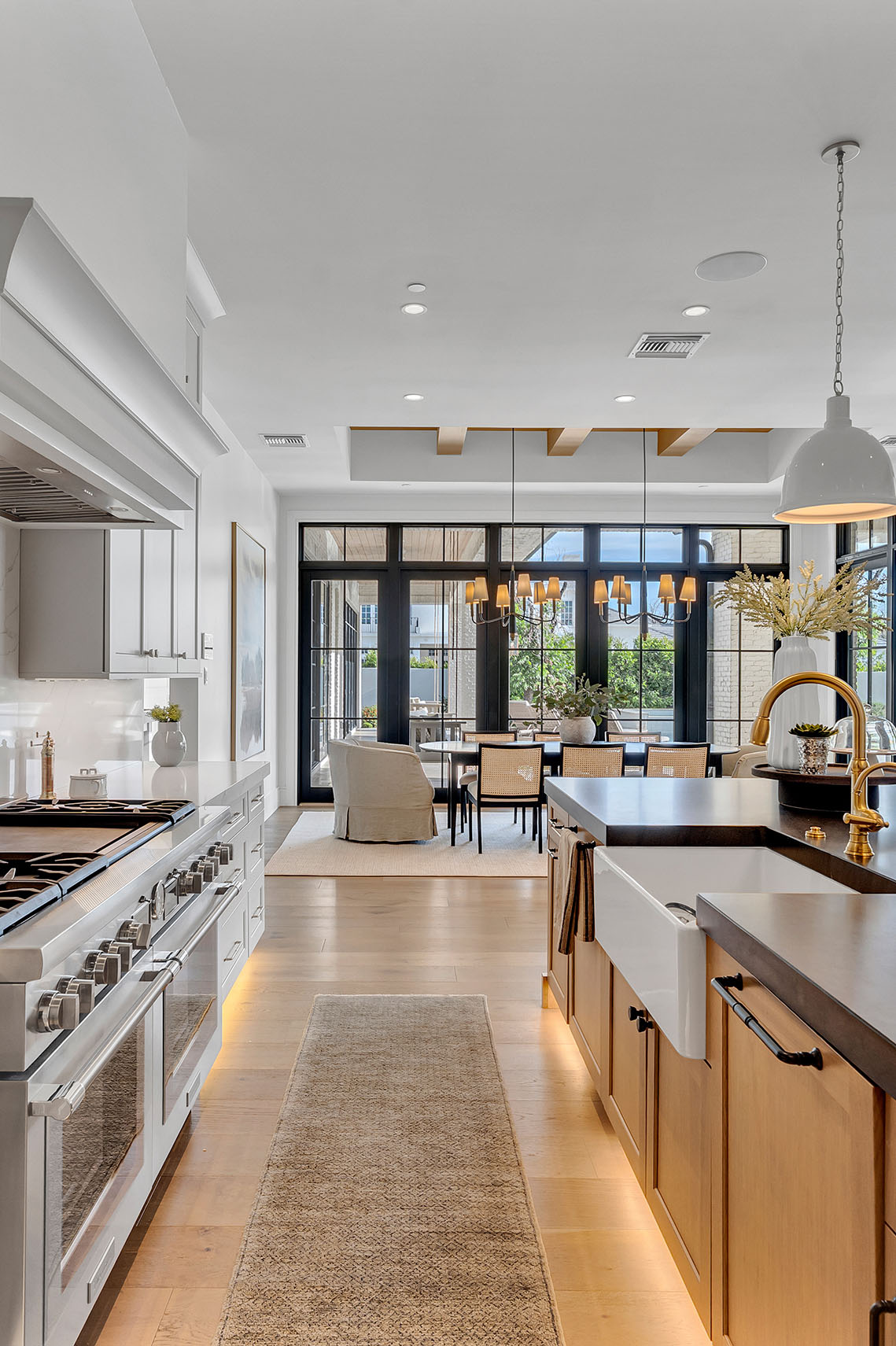
Interior finishes include trim and millwork, cabinetry, countertops, flooring, tile, interior doors, paint, and lighting fixtures. Each of these involves the selections you made earlier, now becoming tangible. This is where craftsmanship becomes visible and where the difference between an ordinary build and a luxury home is most apparent. Meticulous attention to reveals, transitions, and finish quality is what sets a truly custom home apart.
This phase is also where interior design and styling integrate most closely. Coordinating finishes with the furnishings, textiles, and decor that will fill the home ensures a seamless, cohesive result. The curated pieces available through Designly Done — from lighting to textiles to character-rich accents — let us style your home as a complete vision rather than leaving you to furnish an empty shell at the end.
Phase 9: Exterior Finishes and Landscaping
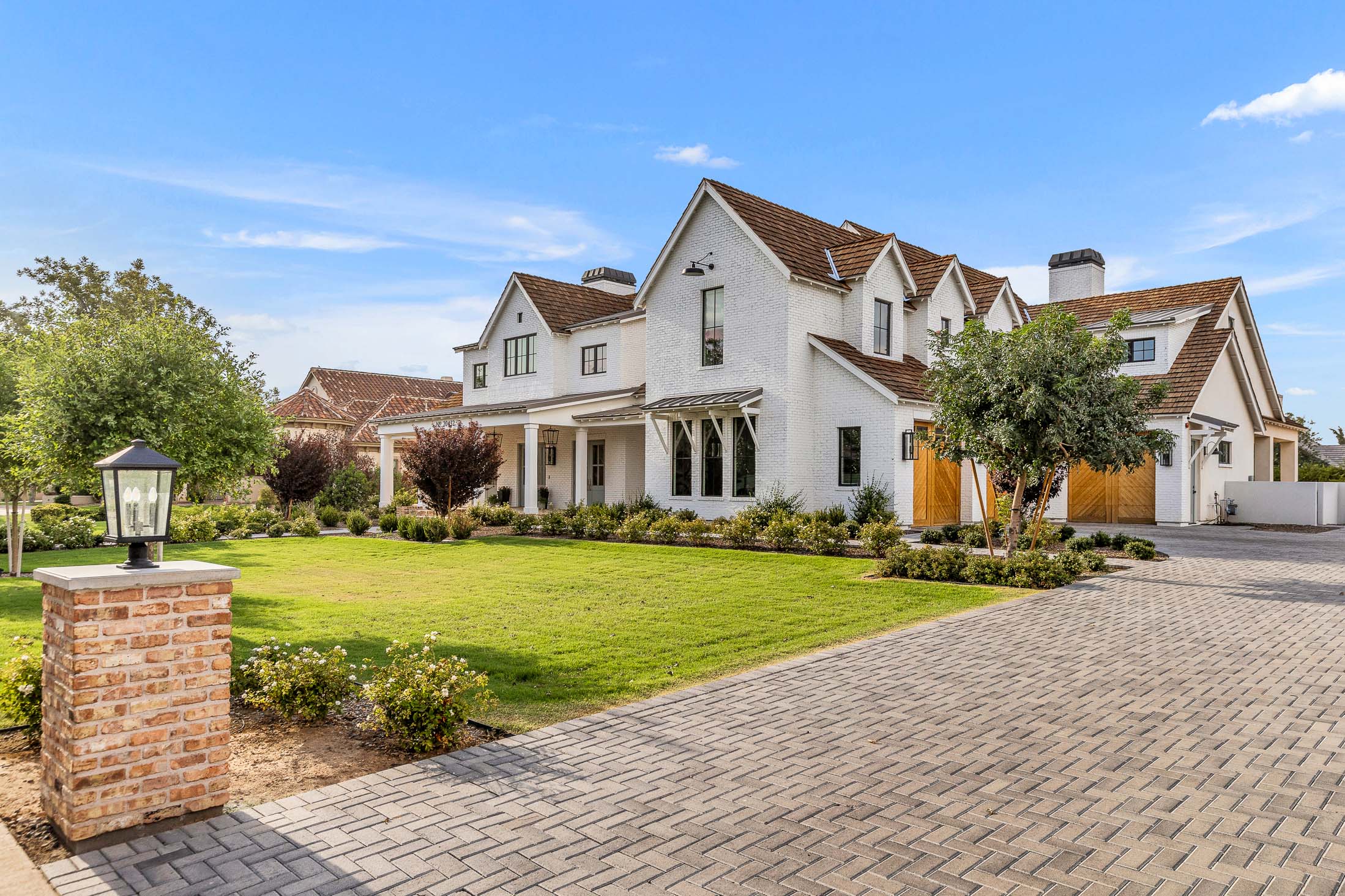
While interiors progress, exterior work continues: siding, stone or brick, stucco, exterior paint, decks, patios, driveways, and garage doors. Landscaping — grading, hardscape, planting, and irrigation — typically comes toward the end and is heavily influenced by season and weather, which matters in Utah County’s climate.
These finishing touches define curb appeal and how the home relates to its site. A thoughtfully landscaped lot completes the architecture and makes the home feel rooted in its surroundings.
Phase 10: Final Walkthrough, Inspections, and Move-In
As construction wraps, the home undergoes final inspections to secure the certificate of occupancy. You’ll also do a detailed walkthrough with your builder — often called a punch list — to identify any final touch-ups, adjustments, or items that need attention before you move in.
A quality builder treats this stage with the same care as the rest of the build, addressing every item promptly. Once the punch list is complete and final approvals are in hand, you receive your keys. After many months of planning and construction, you finally step into a home built specifically for you.
Even then, a reputable builder stands behind their work. The Ashtin Group provides warranty support after move-in, so you have peace of mind as you settle in and the home goes through its first seasons.
Tips for a Smooth Custom Home Building Process
A few habits make the entire journey smoother. Make decisions early and stick with them, since mid-build changes cost time and money. Maintain open, regular communication with your builder and don’t hesitate to ask questions. Build a contingency reserve of roughly ten to fifteen percent into your budget for the unexpected. Visit the site at agreed milestones rather than daily, to stay informed without disrupting the crew. And lean on your builder’s expertise — that experience is exactly what you’re paying for.
Above all, choose a builder you trust and enjoy working with. You’ll be partners for well over a year, and the relationship matters as much as the résumé.
Building With The Ashtin Group
The custom home building process is a significant undertaking, but with the right partner it’s also one of the most exciting and rewarding experiences a homeowner can have. As Utah County’s luxury custom home builder, The Ashtin Group manages every phase above with transparency and craftsmanship. Justin leads construction with a relentless focus on build quality, while Ashley leads design — and through Designly Done, takes your home all the way through interior design and furnishing.
That integrated design-build approach means you have one trusted team from the first conversation to the day you move into a fully realized, beautifully styled home. If you’re considering building in Provo, Alpine, Mapleton, Lehi, or anywhere across Utah County, we’d love to walk you through the process in person.
Frequently Asked Questions
In Utah County, the construction phase typically takes 10 to 16 months from breaking ground to move-in, with design and pre-construction adding several months on the front end. From your first design meeting to move-in day, a realistic range is 14 to 24 months, depending on the home’s size and complexity, the lot, permitting, weather, and how quickly selections are finalized. The Ashtin Group provides a detailed schedule for every project.
The custom home building process moves through clear phases: establishing your vision and budget and choosing a builder; finding and evaluating a lot; architectural design and planning; permits, engineering, and pre-construction; site work and foundation; framing; mechanical, electrical, and plumbing rough-in; insulation, drywall, and interior finishes; exterior finishes and landscaping; and finally inspections, walkthrough, and move-in.
Cost depends heavily on the lot, size, level of finish, and material selections rather than any single number. The biggest drivers are finish quality and materials, not square footage alone. A good builder helps you set a realistic budget early — including land, construction, design, finishes, landscaping, and a contingency reserve — and guides you on where to prioritize spending. Contact The Ashtin Group for a tailored estimate.
As early as possible — ideally during the design and pre-construction phases, before breaking ground. Finalizing selections like flooring, cabinetry, fixtures, lighting, and tile up front keeps construction on schedule and minimizes costly mid-build changes. Integrating interior design from the start, as we do through Designly Done, ensures a cohesive result.
Not necessarily. If you don’t already own a lot, finding the right one is an early step in the process, and an experienced local builder can walk lots with you before purchase to assess build implications like slope, soil, drainage, and utility access. This guidance can save significant money and prevent surprises later in the build.
Yes. Through our sister company Designly Done, led by designer Ashley Kuhni, we offer full-service interior design and curated furnishings. This integrated design-build approach means your home is designed, built, and styled by one trusted team — so you move into a complete, cohesive home rather than an empty shell.
Ready to Start Building Your Custom Home? Start Here.
Building custom should be exciting, not overwhelming. With a transparent process and an integrated design-build team, we guide you from the first conversation through design, construction, and final styling — so you move into a home that’s truly yours.
Ashtin Group UT — Utah County’s Luxury Custom Home Builder | ashtingrouput.com
Designly Done — Utah County’s Luxury Home Decor Store & Design Center | designlydone.com
Building and designing extraordinary homes across Provo, Orem, Lehi, Saratoga Springs, Eagle Mountain, Springville, Spanish Fork, Mapleton, Payson, and all of Utah County, Utah.
About the Founders: Ashley and Justin Kuhni are the founders of Designly Done (luxury home decor store and full-service interior design center) and Ashtin Group UT (luxury custom home builder serving the Wasatch Front). Together they lead an integrated design-build team dedicated to creating and furnishing extraordinary homes throughout Utah County.